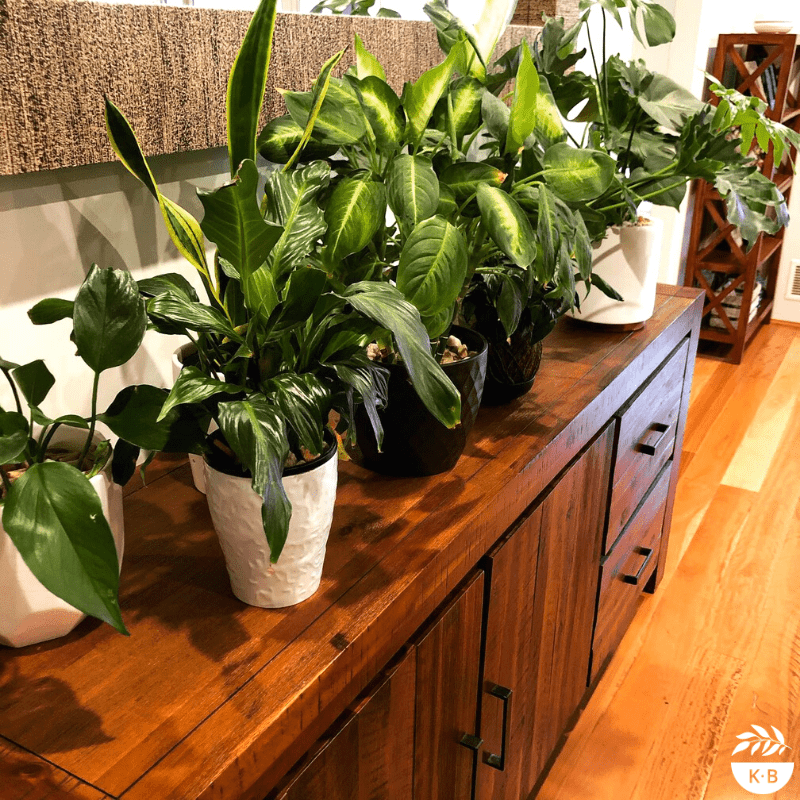
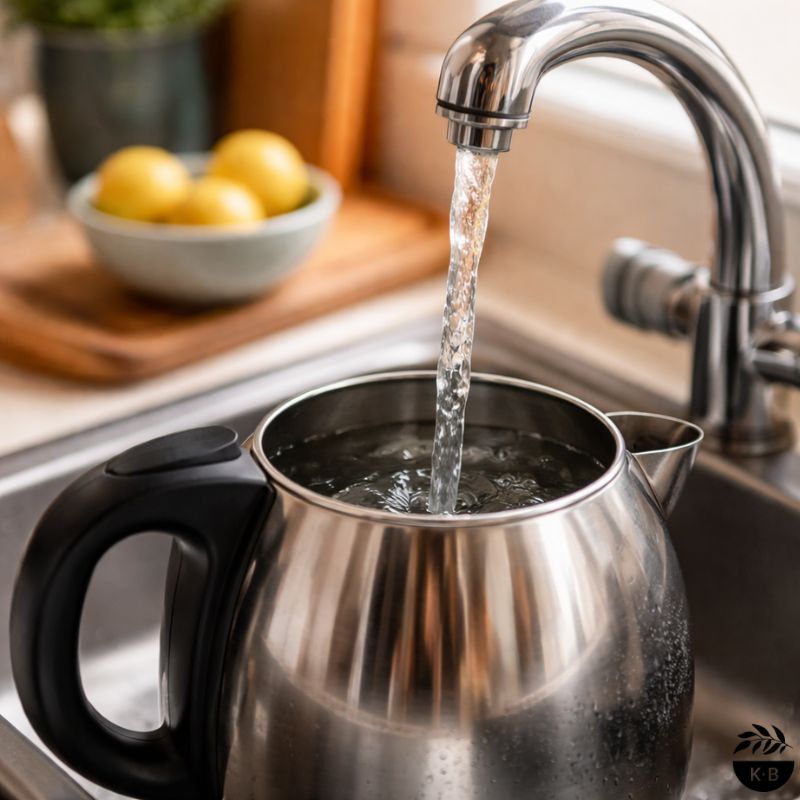
 Do you wait for your tap to run hot before filling your saucepan or kettle? I do. Well… I did. I thought I was doing the right thing – catching the cold water for my house plants while I waited. Eco-savvy, productive, energy smart, frugal… or so I thought. It turns out this may not be the best habit to get into; I’ll share why.
I recently shared an Instagram reel on this topic, where Dr Amy Shah explained that because hot water doesn’t come straight from the mains like cold water does, it can contain things like residue, mould and trace metals from pipes, tanks and heating elements. Heat makes water more reactive, meaning it can dissolve and carry more from whatever it touches. Cold water, on the other hand, is fresh from the mains and less likely to carry anything extra with it. It’s worth noting that while boiling water may reduce bacteria, it doesn’t reduce metal contaminants. So, while it might seem like a shortcut, you’re potentially starting with water that is not as fresh and clean as it could be.
In response to my Instagram story, I received a message from a member of our community whose family runs a solar hot water business. Her advice was straightforward: never use hot tap water for drinking or cooking, regardless of the system. Howwwwww have I never thought of this?
According to the Australian Centre for Disease Control guidance on ‘Reducing exposure to metals in drinking water from plumbing products’, hot tap water shouldn’t be used for drinking or cooking, as it can contain higher levels of dissolved metals from plumbing and is more likely to have sat stagnant in the system. It also tends to have lower oxygen and poorer taste compared to cold water. As a precaution, only cold water should be used for things like cooking, making drinks and ice, filling kettles and preparing infant formula.
To further reduce potential exposure to contaminants in drinking water, the Australian CDC also recommends:
〉 running taps for about 10 seconds first thing in the morning, and for 2 minutes after the tap hasn’t been used for more than 48 hours (e.g. after time away on holidays)
〉 ensuring taps and drinking outlets are flushed before use in schools, childcare settings and other shared environments
〉 regularly cleaning tap aerators (the little mesh on your tap) to remove trapped metal particles
〉 considering a water filter if you’re concerned about metals (and maintaining it properly)
〉 being mindful of rainwater systems, which can be more prone to metal contamination depending on roofing and storage
How does the saying go? Once you learn something, you can’t unlearn it. Does that resonate for you? This really is one of those simple lifestyle edits that won’t take much effort, but may be a useful practice to help support overall wellbeing.