 I remember when I made the decision to start eating low-carb. I wanted to overhaul my diet overnight. I was consuming a ridiculous amount of information. I wanted, needed to know it all, and I wanted to press pause on mealtimes so I could do it properly from the very beginning!
I don’t recommend this 😝
In this post, I’m giving you the highlight reel for a quick-start so you can dive in with confidence, knowing you’re on the right track. You can tweak things as you go, depending on your goals, preferences, time constraints and lifestyle.
The information below is a summary of what I found most useful in the early days, but with the added benefit of hindsight. You’re getting the distilled version. Lucky you!
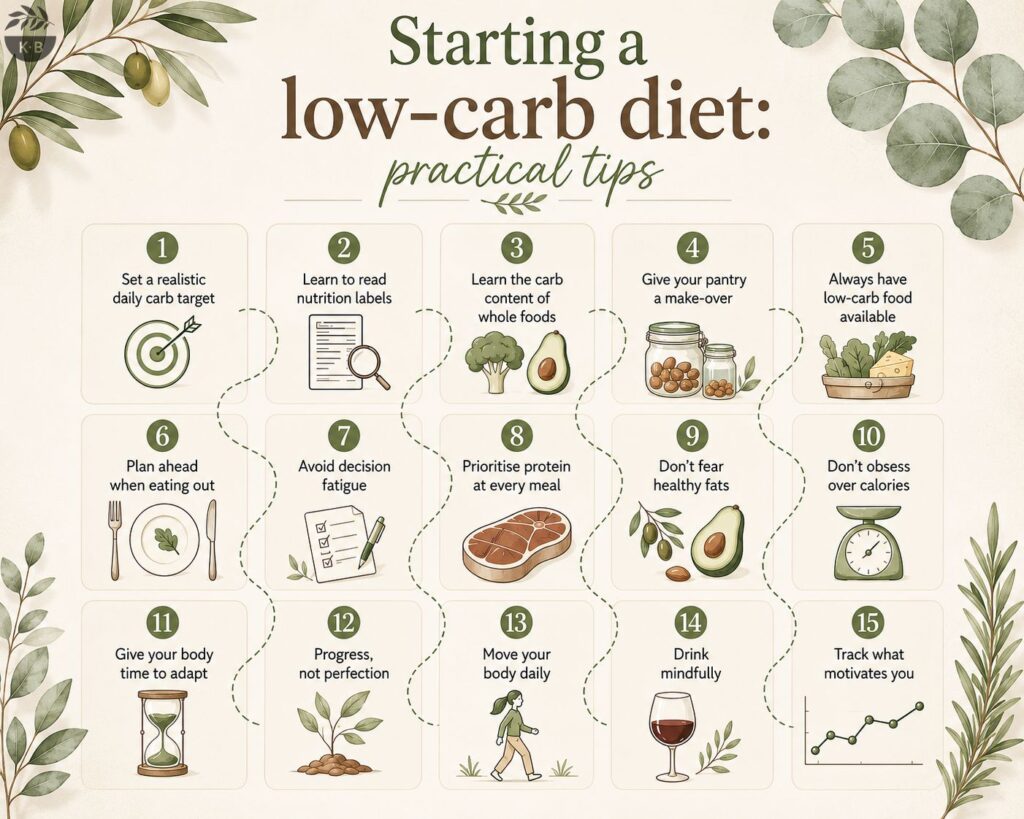
My top 15 tips to get you on the right track
〉Set a realistic daily carbohydrate target
Are you an all-or-nothing kinda person, or do you need to ease into things? Figure out a realistic goal, something that works for you.
On average, Australians consume more than 200g of carbohydrates a day (source). The higher your current carbohydrates intake, the more challenging you may find the switch to a low-carb diet. It’s absolutely doable, but some of you may need extra support.
Most people will benefit from aiming for fewer than 50g of net carbohydrates per day. This is often enough to improve metabolic health, stabilise blood glucose and lower insulin levels. Personally, I aim for around 20g of net carbohydrates per day, which keeps me in nutritional ketosis.
〉Learn to read nutritional labels
This is one of the most valuable skills you’ll develop. It takes the guesswork out of shopping and helps you make informed decisions.
When choosing packaged foods, aim for products that contain fewer than 5g of net carbohydrates per 100g. In Australia, that’s easy because fibre is listed separately on nutrition panels, so the carbohydrate figure is already your net carbohydrate content. Because fibre is largely indigestible and has little, if any, impact on blood glucose, it isn’t included in this total.
You’ll also notice a line for sugars. These are included in the total carbohydrate figure. The remaining carbohydrate is mostly starch, which is also broken down into glucose during digestion. That’s why, when following a low-carb lifestyle, it’s the total carbohydrate figure that matters most, not the sugar content.
Let’s use the panels below as an example.
The product on the left (plain Greek yoghurt) has 3.8g of net carbohydrates per 100g. Of that, 3g comes from naturally occurring sugars, making it a low-carb option.
The product on the right (vanilla-flavoured Greek yoghurt) has 12.9g of net carbohydrates per 100g, 10.3g of which is sugar. The same family of food, same brand, but very different carbohydrate content.
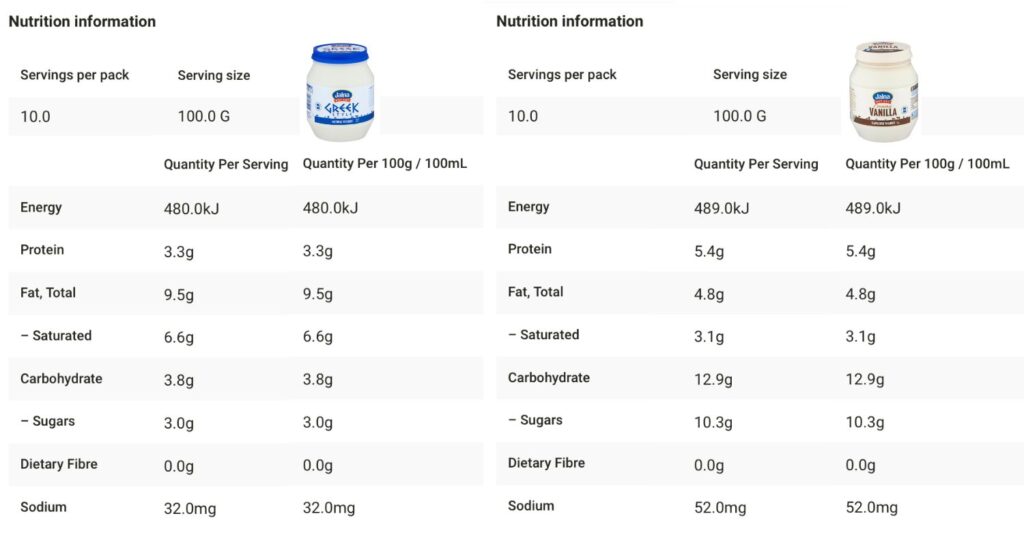
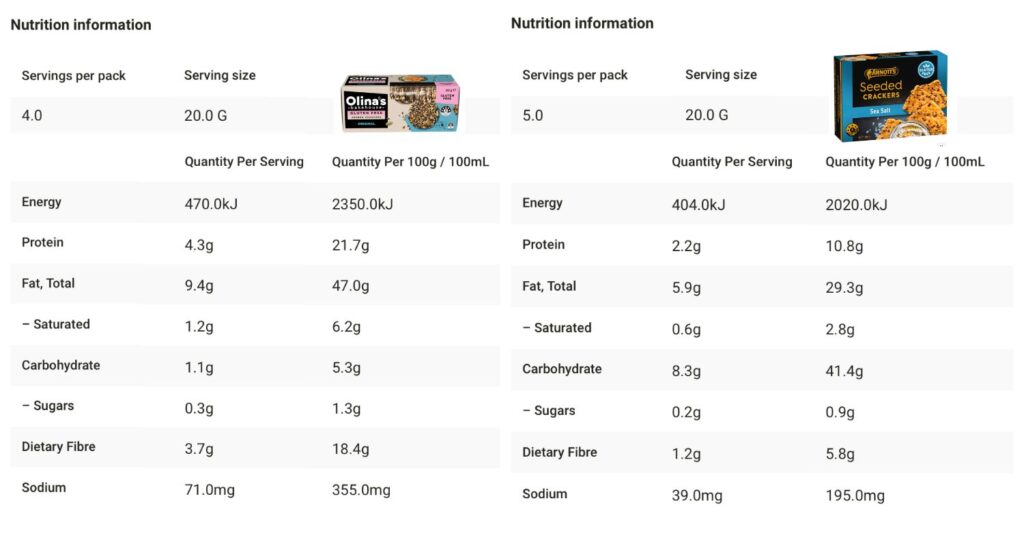
Here is another example.
The seeded crackers on the left have 5.3g of net carbohydrates, 1.3g of sugar and 18.4g of fibre per 100g. The seeded crackers on the right have 41.4g of net carbohydrates and just 0.9g of sugar. Despite being low in sugar, they’re still high in carbohydrates because most of those carbohydrates come from starch.
〉Learn the carbohydrate content of whole foods
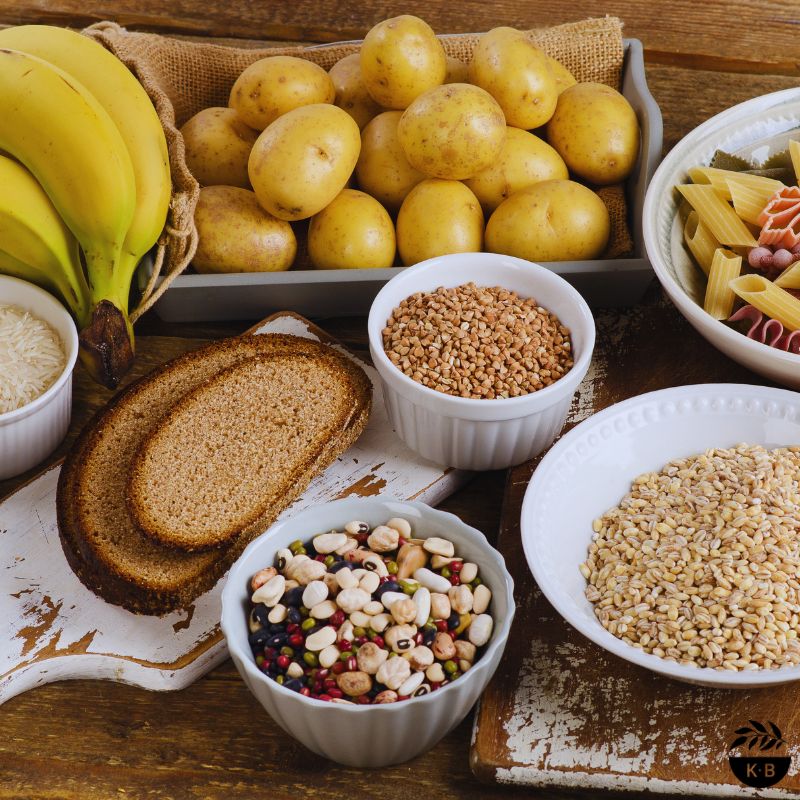
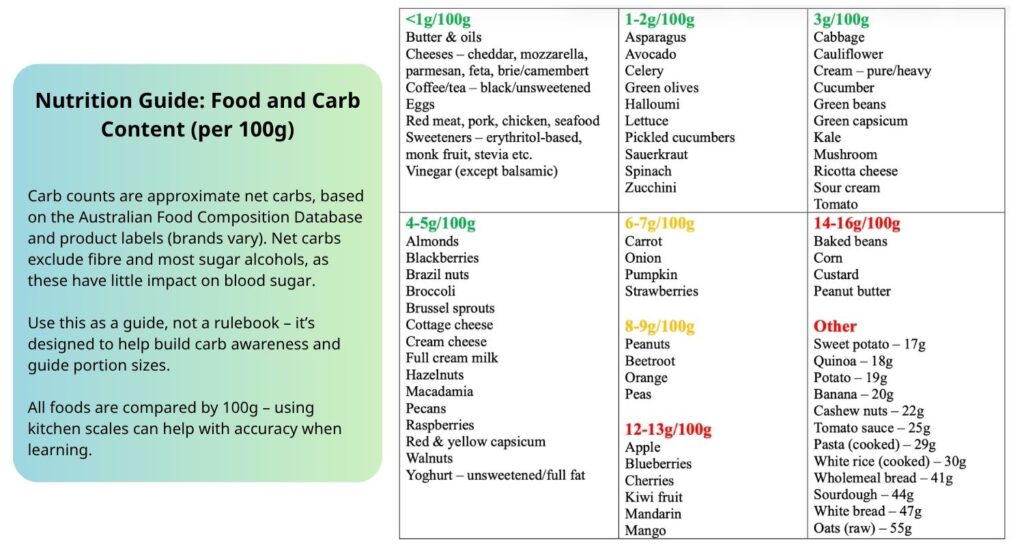
Whole foods don’t need labels, of course, but it is helpful to have a rough idea of how many carbohydrates are in the fruits, vegetables and other whole foods you eat regularly. This quick reference guide also includes a selection of common everyday foods for comparison.
〉Give your pantry a make-over
Have a look through your pantry, fridge and freezer. Identify foods that are high in carbohydrates, highly processed, or simply too tempting to keep around while you’re building new habits.
You don’t necessarily need to throw everything away. I donated quite a bit of mine through Facebook Marketplace – there are people who aren’t in a position to prioritise their health right now, whether that’s because of finances or other circumstances, so it’s a good way to pass it on.
I also realise that overhauling your pantry isn’t always realistic if your family isn’t on board with changing their eating habits. This can be challenging, especially if you tend to make poor food choices or are more likely to give in to temptation when you’re emotional, stressed or time-poor. If that’s your situation, think about what changes are within your control. Even a dedicated shelf in the fridge or pantry with your own low-carb options can make things easier.
〉Always have low-carb food available
If you’re busy, prone to emotional eating, or often find yourself grabbing food on the run, having ready-to-go, easy options is essential. Planning beats willpower every time.
Boiled eggs, cheese, leftover meat, nuts, olives, avocado, or homemade low-carb bites (bulk cooking and freezing is a game-changer) can all save you from making hungry decisions you’ll later regret.
I’ll be sharing some of my favourite recipes soon, so keep checking back. I have some delicious low-carb replacements for things like pancakes, muffins, tortillas and pizza bases, as well as meals and options for on-the-go bites.
〉Plan ahead when eating out
Eating out can become a little trickier. I find breakfast the easiest meal to catch up with friends. Eggs, avocado, mushrooms, tomato, haloumi, bacon, house-made hollandaise are my go-to choices, and they keep me full for hours.
I don’t go out for dinner all that often. Having said that, there are still plenty of options. It helps to look up the restaurant beforehand, check the menu and have an idea of what you’ll order. Most places offer meals like steak, fish or chicken, naked burgers and salads (Caesar with chicken, bacon and egg) is a great choice. You can usually ask for vegetables or salad in place of chips or mash, burgers can be made without buns, and croutons and dressing can be left off the salad or served on the side. You might still consume some unavoidable extra carbohydrates when eating out, but these tips will minimise the load.
〉Avoid decision fatigue
Rather than filling your days and weeks with too much variety or trying to recreate every meal you used to cook, try and keep it simple.
Find five or so meals you enjoy that tick the low-carb box and leave you feeling satiated, then put them on repeat for a few weeks. Remove as many food decisions as possible while you’re learning and settling into this new way of eating. You can always branch out and experiment with new recipes later.
〉Prioritise protein at every meal
When you’re building your plate, aim to include a good source of protein at every meal.
Eggs, meat, poultry, seafood and full-fat dairy help keep you full for longer and support muscle maintenance while your body adapts to burning more fat for fuel. Protein is also a filling and satiating macronutrient, making it much easier to control hunger and reduce snacking.
Once your protein is sorted, add non-starchy vegetables and healthy fats to suit your appetite. If you’re wondering whether you’re eating enough protein, you’re probably better off having a little more than not enough, especially as you get older or if you’re physically active.
If you’re unsure of your macronutrient breakdown, AI tools like ChatGPT or Claude can be useful. Just enter what you’ve eaten, and it can estimate your protein, carbohydrate and fat intake for the day. It won’t be perfect, but it’s usually accurate enough to help you identify where you might need to make a few adjustments.
〉Don’t fear healthy fats
For years we’ve been told to avoid fat, but when you reduce carbohydrates, healthy fats become an important source of energy. They help keep you fuller for longer and give your body a steady source of energy. You’ll find you can go longer periods without eating, giving insulin a chance to fall between meals instead of being repeatedly stimulated throughout the day.
I remember when I started eating more fat, the food noise dialled down. Leaving the house for the day after a hearty, low-carb brekkie was easy. I didn’t need to plan around finding snacks or a meal while I was out. It’s liberating.
The goal isn’t to eat fat for the sake of it, but don’t be afraid to include enough to leave you satisfied.
〉Don’t obsess over calories
One of the biggest benefits of a low-carb lifestyle is that appetite often starts regulating itself. When meals are filled with protein, healthy fats and minimally processed foods, hunger and cravings usually settle, making it so much easier to eat the amount your body actually needs.
If weight loss is your goal and progress stalls, you may need to make some adjustments and take a closer look at the calories coming in, particularly from fat. For most people, though, focusing on food quality and eating until comfortably satisfied works way better than constantly tracking calories.
〉Expect an adjustment period
It’s normal to feel a bit blah during the first 3 to 7 days, sometimes up to 2 weeks, as your body adapts. This is dubbed the ‘keto-flu’ and is largely related to losing water and electrolytes as insulin levels fall. Headaches, tiredness and brain fog are all common, but temporary.
My 13-year-old son was super cranky when he broke up with carbs, my 15-year-old daughter was fine, and my 44-year-old bestie has been on a rollercoaster. Everyone is different.
Drinking plenty of water and making sure you’re getting enough sodium can make a huge difference. We are obsessed with Aussie-owned Sodii electrolytes. Click here for a 15% discount.
On the note of salt, we need it. Insulin tells the kidneys to retain water, so when it drops, your body lets go of extra fluid, and sodium is lost along with it. Without processed food, salt becomes even more essential. Unless you have a medical reason to limit salt (it’s always worth checking with your doctor if you’re unsure), don’t be afraid to add good-quality salt to your meals. I add a few shakes of lake salt to my morning and evening glasses of water.
The good news is that this adjustment period doesn’t last forever. Within a few weeks, you should start noticing steadier energy, fewer cravings, reduced bloating, better sleep, improved mood and clearer thinking. Hunger often settles too, as your body becomes more efficient at using fat for fuel.
Commit to giving it a fair chance before deciding whether it’s right for you. The longer you stick with it, the easier it becomes, and before long it stops feeling like a diet and simply becomes the way you eat.
〉Don’t let perfection get in the way of progress
You don’t have to get every meal perfect. If you overdo it on carbs (planned or not), don’t write the whole day or week or diet off. One meal won’t undo all your hard work, just as one healthy meal won’t transform your health overnight. Consistency over weeks, months and years is what really matters.
If you do choose to enjoy a higher-carbohydrate meal from time to time, there are a few simple things you can do to help reduce its impact on your blood glucose.
- Have 1 tablespoon of apple cider vinegar before or during the meal. Studies have shown it can help reduce the post-meal rise in blood glucose and insulin.
- Move your body after eating. A 10-minute walk, a few flights of stairs, or a short bodyweight workout encourages your muscles to use glucose, helping to reduce the post-meal glucose spike.
- Pair carbohydrates with protein or healthy fats. Eating carbohydrates alongside foods like meat, eggs, cheese or nuts slows digestion and generally leads to a smaller rise in blood glucose than eating carbohydrates on their own.
〉Move your body
Exercise doesn’t have to be intense or time-consuming to make a difference – don’t underestimate the power of exercise snacks! Try to incorporate as much incidental movement in your day. Park further from the supermarket, take the stairs instead of the travelator, carry grocery bags rather than push a trolley, etc. And avoid long periods of inactivity. You’re better off doing several 5-minute walks throughout the day than one hour-long walk once a day.
Resistance training (and building muscle) is one of the best things you can do for your metabolic health. You don’t need a gym membership. Squats, lunges, push-ups, resistance bands or lifting household objects all count.
If you’re able to, try adding a few short bursts of vigorous movement into your day. One minute of skipping, hill sprints, fast stair climbing or high knees can have a surprisingly big impact on fitness and metabolic health.
〉Alcohol can still have a place
Yes, you can still enjoy alcohol if you choose to. Just keep in mind that it is a toxin and your body treats it as a priority. While it’s busy breaking it down, fat burning temporarily takes a back seat.
If you do drink, opt for lower-carbohydrate choices such as dry wine, ultra-low-carb beer, or spirits like vodka, gin or rum with sugar-free mixers. As with everything, moderation is key.
〉Track what motivates you
Some people love data. Others would rather go by how they feel. If you’re someone who enjoys seeing progress in numbers, or needs it to stay accountable, tracking can be incredibly motivating and educational.
A few options include:
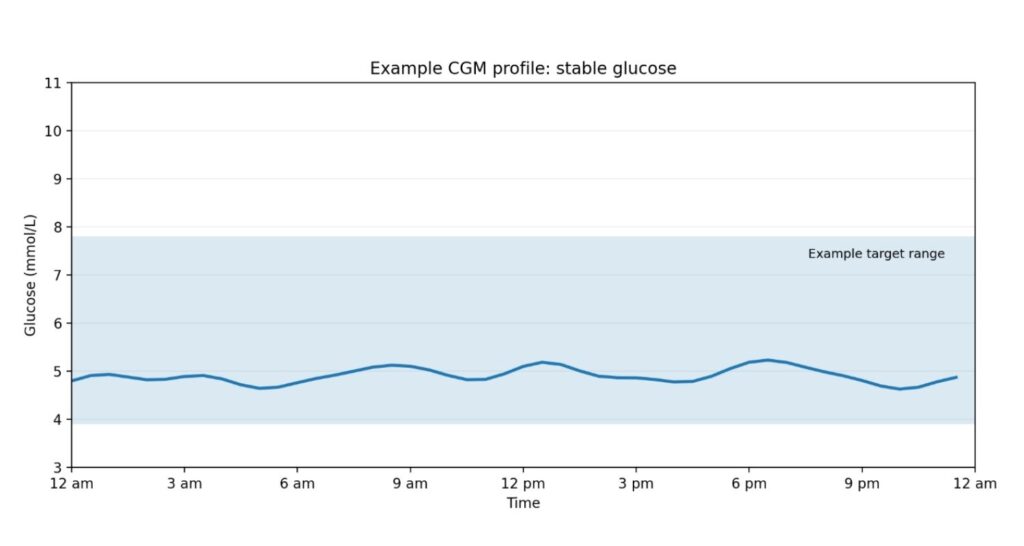
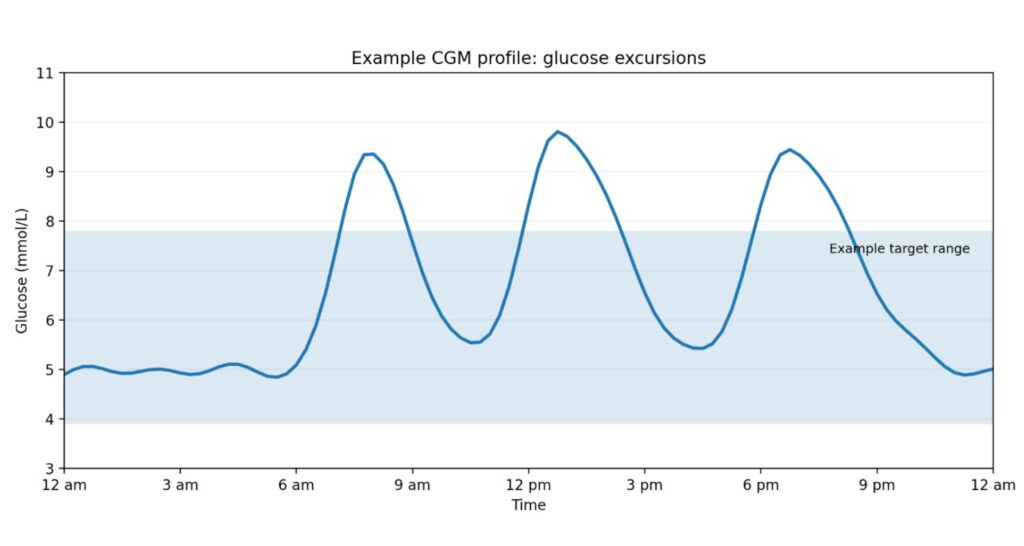
- Continuous glucose monitors (CGM) let you see how different foods, meals, stress, sleep and exercise affect your blood glucose in real time. You might be surprised by what you learn. Ideally, you want to keep your levels stable throughout the day, with no big excursions (see graphs below). Normal blood glucose levels range between 4mmol/L and 7.8mmol/L (source).
- Blood ketone meters measure beta-hydroxybutyrate (BHB) in your blood. This is produced by your liver from fatty acids released during lipolysis (fat burning), in a process called ketogenesis. Breath analysers and urine strips are available too, but blood testing is generally considered the most accurate way to measure blood ketone levels. Levels between 0.5mmol/L and 3.0mmol/L generally indicate you’re in nutritional ketosis and burning fat for fuel.
- Body measurements can tell a very different story to the scales. Measure your waist, hips, thighs or wherever you’d like every few weeks. I recently saw someone use a piece of ribbon around her waist each week, trimming it shorter as she lost centimetres. It was such a simple visual reminder that progress isn’t always reflected by body weight. Aim for a waist circumference of less than 80cm for women and 94cm for men.
- Body composition scans, such as an InBody scan or DEXA scan, can show changes in muscle mass, body fat and visceral fat. Many gyms offer body composition scans, which can be useful if you’re more interested in improving your body composition than simply losing weight. Remember that the scales don’t tell the whole story; weight is only one piece of the puzzle. As your metabolic health improves, you may gain muscle while losing body fat, meaning your weight changes very little even though your body composition, energy and health markers are improving significantly.
- Progress photos are another great option. The day-to-day changes are hard to notice, but comparing photos taken a month or two apart can be incredibly encouraging.
You don’t need to master everything in this guide before you begin. Start with a few simple changes and build confidence as you go. With each passing day, low-carb living will feel more natural. Choosing what to eat will become easier, reading nutrition labels will become second nature, and you won’t feel the need to constantly search for recipes or replacements. Before long, it will just feel normal, and chances are, you’ll have more energy, fewer cravings, and a healthier body to show for it!
Save this infographic as a quick reference guide.