Learning how to read labels is a lifelong skill – it’ll help you make informed decisions when shopping. Go ahead and buy whatever you need and want, I’m all for that, but go in with your eyes open.
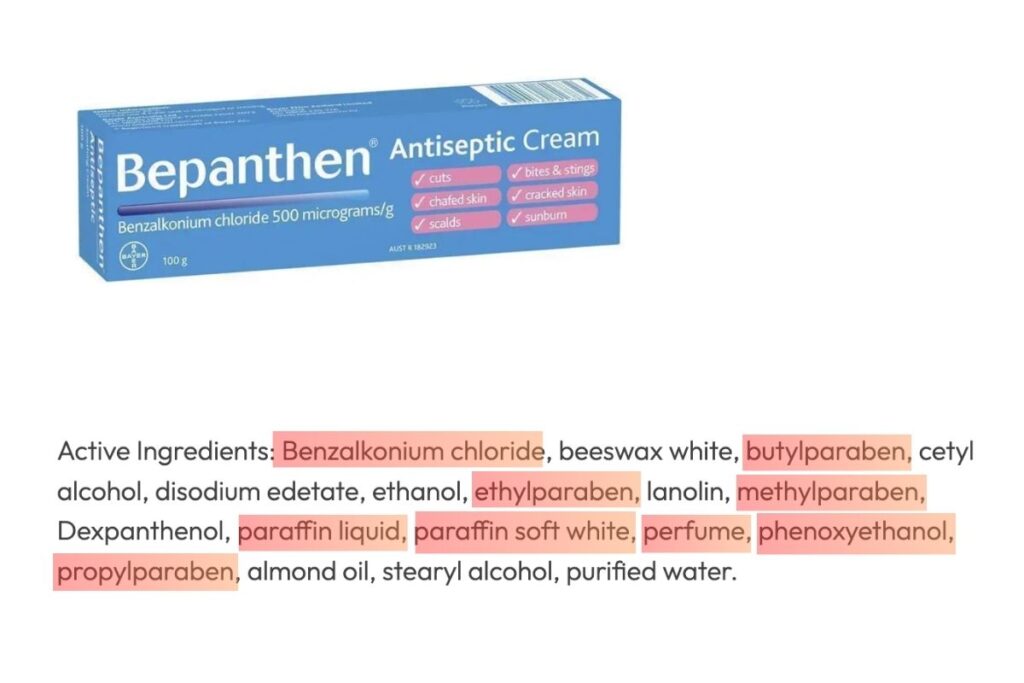
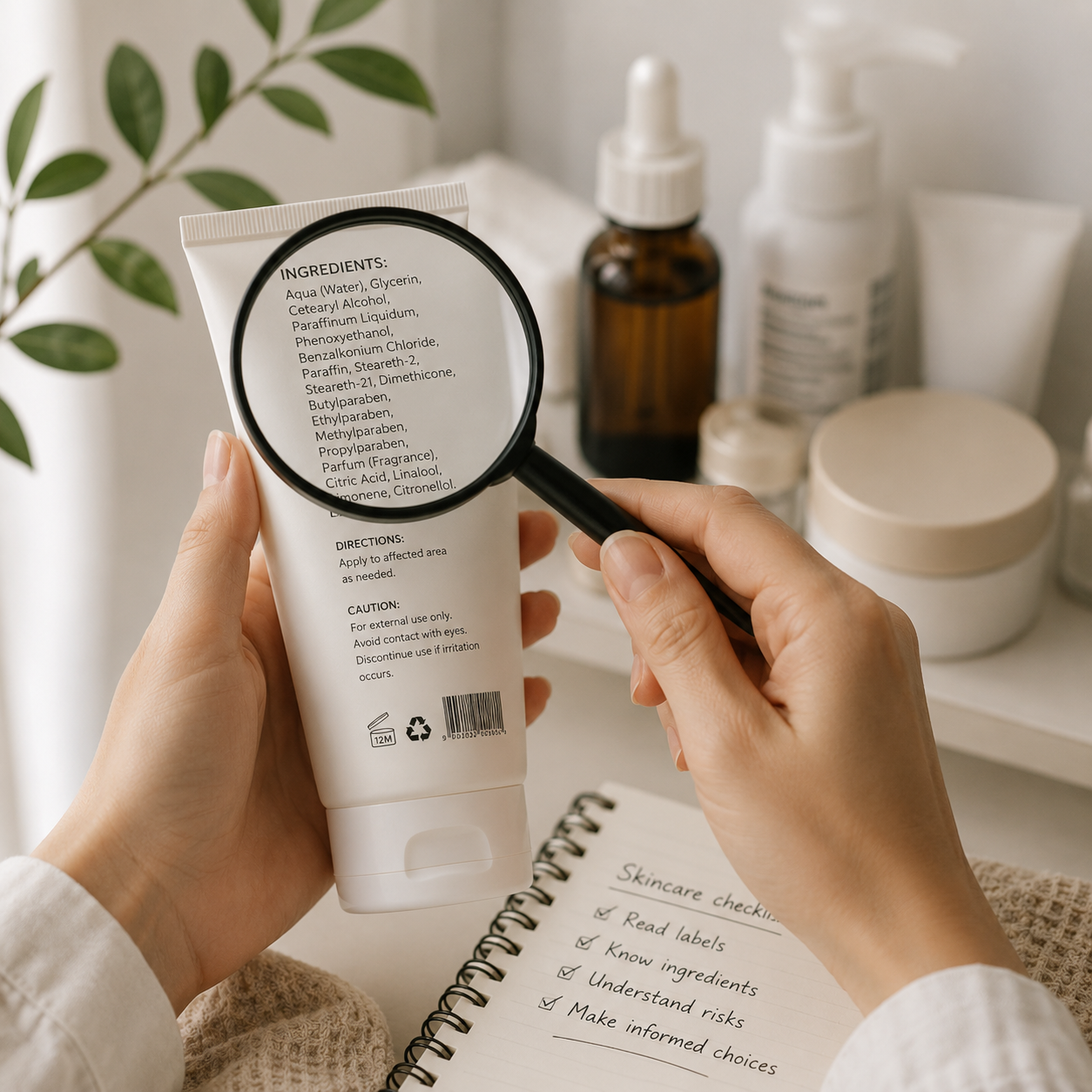
I stumbled upon a popular antiseptic cream while researching for my online course (learn to read labels, 7 days, $19, updated often, lifetime access, jump in and out – you can check it out and sign up here). Check out the ingredients – there are too many that raise a flag for me.
It’s not only the fact that research exists, demonstrating potential issues and raising some doubt with each ingredient in isolation, it’s the interaction between ingredients that concerns me most.
After all, these ingredients aren’t used in isolation in real life. We layer multiple products onto our skin every single day – skincare, makeup, sunscreen, shampoo, cleaning products and more. Yet most safety assessments are based on individual ingredients at specific concentrations, not the cumulative exposure that comes with modern living.
When I look into the safety of certain ingredients, I often read about ‘safe limits’. But, what actually constitutes a ‘safe limit’? Has the cocktail effect and long-term cumulative exposure been considered, especially for vulnerable groups like babies, children, those with eczema-prone skin, or people already dealing with a higher toxic load?
I’m not saying every ingredient here is automatically dangerous or that using a product like this once means doom and gloom. But I do think these are valid questions worth asking, and part of learning how to become a more informed consumer.
Let’s break this ingredient list down a little:
〉Parabens (butylparaben, ethylparaben, methylparaben, propylparaben)
- Used as preservatives
- Some research suggests they can mimic oestrogen in the body
- So many brands have already ditched them
〉Benzalkonium chloride
- Antimicrobial preservative and disinfectant
- Recognised as a cause of contact dermatitis in some people
- Can be irritating for some, especially if you struggle with eczema-prone, broken or sensitive skin
〉Phenoxyethanol
- Synthetic preservative commonly used in skincare and personal care products
- Often used as an alternative to parabens
- Can cause irritation in some people, particularly around the eyes and on sensitive skin
- The research is still evolving, but questions around long-term cumulative exposure keep it on my watch list
〉Paraffin liquid & paraffin soft white
- Used to create a barrier on the skin
- Petroleum-derived ingredients
〉Perfume (fragrance)
- Companies are not required to disclose every individual ingredient – protected by ‘trade secret’ laws
- Fragrance has been linked to migraine, allergies, asthma attacks and nausea
- May contain phthalates, which can accumulate in the body and have been linked to hormone disruption and reduced fertility
The reality is, products like this are popular because they do work for many people. But at what cost? I’m all for first aid and dealing with pain and pressing symptoms, but to use it on the daily, ‘just because’, might need re-evaluation, especially if a simpler, suitable and more natural alternative exists.
Oh, in the description is this: Bepanthen, is gentle enough to be used on baby skin and can even be used on cracked/damaged nipples during lactation. I’m honestly not sure about this…
If you need a healing cream, you might like to try this zinc-based DIY recipe.
After sore-bought? Try brands like Biome, 123 Nourish Me, Go For Zero…
Note, I found this on Chemist Warehouse’s website. The Bepanthen product page (by Bayer) does not appear to list ingredients anywhere.