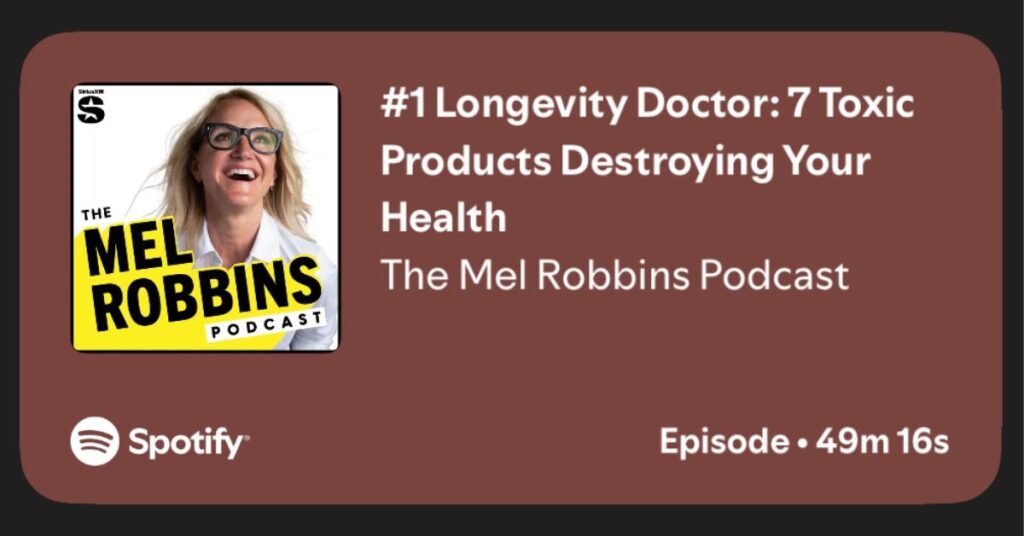
I recently listened to an episode of The Mel Robbins Podcast featuring Dr Eric Topol – a cardiologist and longevity researcher whose work has been cited more than 360,000 times (wowsers!). They discussed something I talk about often: the invisible toxins hiding in everyday products that can silently accelerate ageing, cancer, infertility and heart disease.
We are bombarded with toxins unlike ever before, yet somehow, because exposure has become so common, we rationalise our purchases, use and exposure to products with questionable ingredients. Ultra-processed foods are a key contributor, adding to the problem. Longevity isn’t just genetics – according to Dr Topol, around 70–80% of ageing outcomes are shaped by factors within our control. He notes that young people are being hit hardest, with rising rates of cancer and fertility issues linked to early-life exposure.
Products laced with microplastics, PFAS and volatile compounds are everywhere, making their way into our bodies through inhalation, ingestion or skin contact, are everywhere. Exposure is often slow, chronic and invisible – it’s ‘death by a thousand cuts’.
Here are the key takeaways from the podcast, plus some simple swaps you can make today to significantly reduce your exposure.
Microplastics and PFAS (per- and polyfluoroalkyl substances) aka ‘forever chemicals’ are now found in just about all of us. PFAS have been detected in the blood of up to 97% of people tested. These chemicals have also been detected in arteries, brains, breast milk and even semen.
A recent Italian study found that people with microplastics in their arterial plaques had a 4.5 times higher risk of heart attack or stroke. Where there’s plastic, there’s inflammation – and that’s not a great combo for long-term health.
PFAS are a group of over 10,000 highly persistant chemicals used to make things stain-resistant, non-stick, or waterproof. Dr Topol discusses the case of whistleblower Kris Hansen, who’s work revealed that 3M (the maker of Scotchgard, Post-It Notes, pimple patches, adhesive plasters, clothing etc.) had been aware of the harmful effects of these chemicals for decades, yet continued to use them, highlighting how corporate interests can outweigh public health.
Small, frequent exposures add up. From the products we spray to what we cook with or store our food in, these everyday exposures can contribute to chronic, low-grade inflammation, accelerating ageing and increasing the risk of disease.
But here’s the good news: small, consistent swaps can greatly reduce your exposure, and you don’t have to overhaul everything at once. Just start with awareness and make one change at a time.
Products to watch out for
Here are the everyday items Dr Topol suggests limiting or avoiding where possible:
〉Plastic food storage containers – especially heating food in them, which can release micro- and nanoplastics into your food.
〉Food sold or stored in plastic packaging – plastic can leach into the food. This includes plastic-lined takeaway coffee cups.
〉Hairsprays – many use fluorinated propellants and solvents that aerosolise toxins you inhale. At the very least, spray in an open space (preferably outside) and hold your breath.
〉Scented candles – these can release volatile organic compounds (VOCs) and soot that affect indoor air quality. Opt for essential oil diffusers for scent and beeswax candles for ambience (I have a recipe here).
〉Deodorants and antiperspirants – some contain PFAS and other chemicals that can be absorbed through the skin.
〉Perfumes and fragrances – some contain synthetic musks and phthalates (chemical cousins of PFAS) that can off-gas continuously.
〉Menstrual products and baby nappies – many contain PFAS for ‘leak-proof’ performance.
〉Non-stick cookware – high heat can break down coatings, releasing fumes and particles.
〉Plastic utensils or spatulas – heat and scratches can cause plastic particles to leach into food.
How to Reduce Your Exposure
You can’t eliminate toxins entirely, but you can make meaningful changes. Start here:
1. Swap out plastic in the kitchen
Choose glass, stainless steel or ceramic instead. Avoid storing or heating food in plastic.
2. Filter your air
Indoor air can be more polluted than outdoor air, especially with candles, sprays and cleaners. Open windows regularly and consider using an air purifier if you live in an urban area. I go into more detail about indoor air pollution in this blog.
3. Read labels like a detective
Avoid products listing ‘fragrance’ or ‘parfum’ where possible, as these terms can represent a mixture of hundreds of undisclosed chemicals. Skip aerosol sprays and anything marketed as non-stick, stain-resistant or waterproof unless you’ve checked what they’re made from. Learn how to read labels in my short course.
4. Choose safer cookware
Opt for cast iron, stainless steel or enamel-coated pans. If you’re using non-stick cookware, at the very least, never heat it empty or above medium heat, and replace it once the coating starts to flake.
5. Protect the next generation
Look for PFAS-free options in menstrual and baby care products. There are now fab alternatives made with organic cotton and natural materials.
6. Speak up
Support companies making transparent, toxin-free products. Ask brands if they test for PFAS – public pressure matters more than you think.
The bottom line
We can’t live in a bubble. We’re going to be exposed to chemicals, whether we like it or not. With awareness, and action, we can lighten the toxic load on our bodies and homes.
As Dr Topol and Mel Robbins reminded listeners, longevity isn’t just genetics. Around 70-80% of ageing outcomes are shaped by lifestyle and environment. The more we reduce our toxic exposures, the more we can help protect our cells, hormones and future health.
Listen to the full episode here 👉 Mel Robbins Podcast – #1 Longevity Doctor: 7 Toxic Products Destroying Your Health